How to Wash Your Face Properly: Technique Beats Product
People change cleansers far more often than they change technique, and technique is usually where the problem is. Hot water, sixty seconds of scrubbing and a rough towel will make a gentle cleanser behave like a harsh one.
None of this costs anything to fix.
The method#
- Wash your hands first. You are about to spend a minute moving whatever is on them across your face.
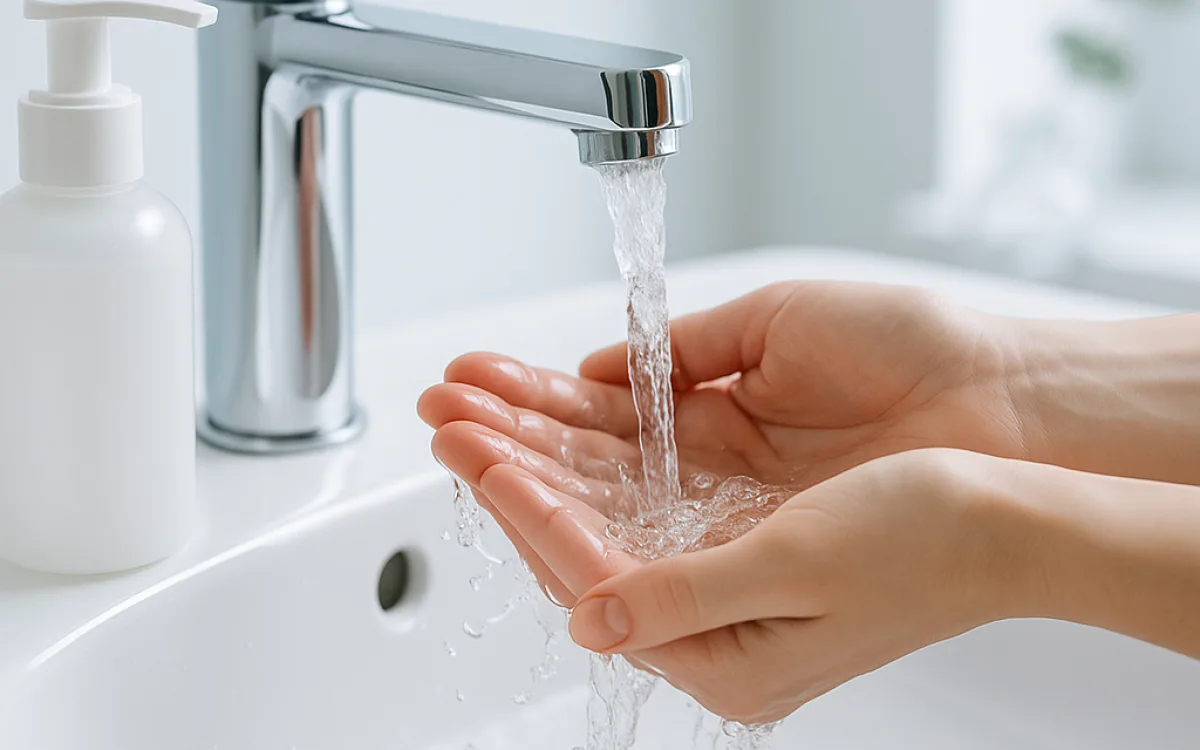
- Wet your face with lukewarm water. Not hot. Hot water feels better and removes considerably more lipid.
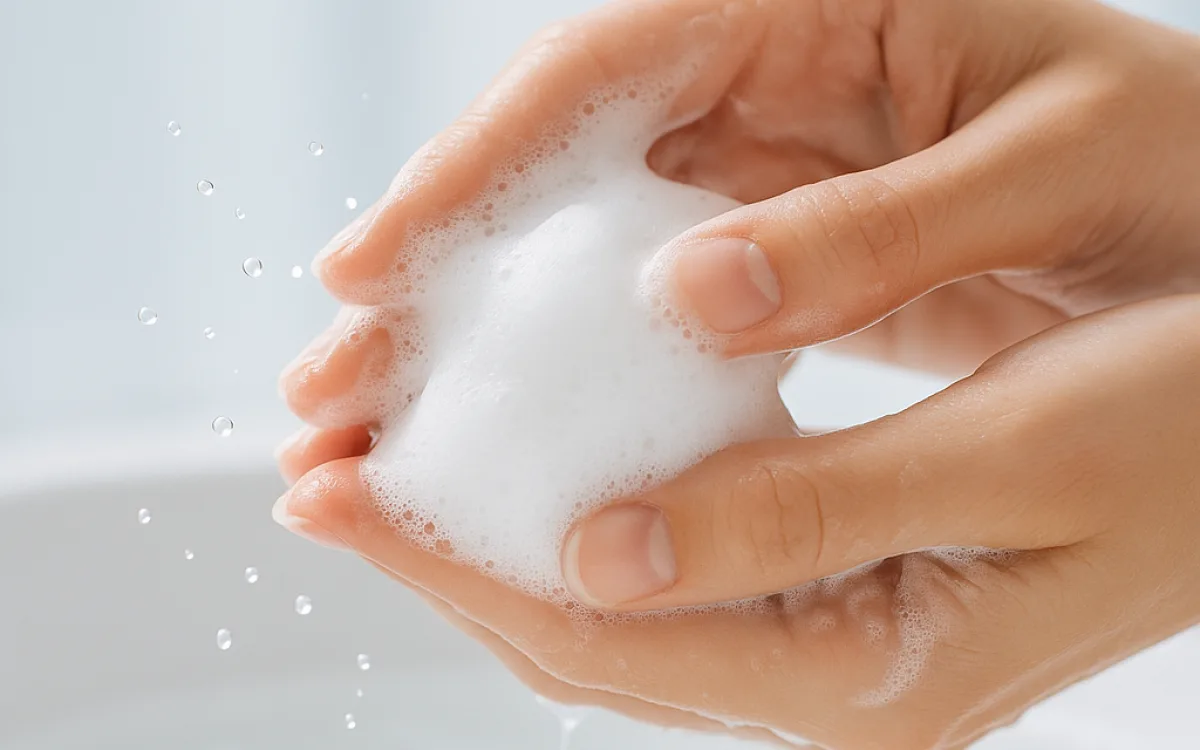
- Emulsify the cleanser in your palms with a little water before it touches your face, so it works evenly instead of concentrating in one spot.
- Massage for about thirty seconds with your fingertips, in light circles. Spend a moment longer around the nose and hairline where product collects.
- Rinse thoroughly — more thoroughly than feels necessary, particularly along the jaw and hairline where residue causes breakouts.
- Pat dry with a clean towel and leave the skin slightly damp. Do not rub.
Water temperature#
Lukewarm, every time. Hot water dilates surface vessels, which increases redness in anyone prone to it, and it removes lipids faster than any surfactant in your cleanser. Cold water does not close pores — pores have no muscles — but it is harmless if you prefer it.
The steam-and-hot-water habit persists because it feels thorough. It is the most damaging part of many otherwise sensible routines.
Contact time#
About thirty seconds for a normal cleanse, up to sixty when you are removing sunscreen. Longer does not clean better; it extends the time surfactants spend disrupting the barrier. Shorter than fifteen seconds and sunscreen tends to survive.
The things people get wrong#
| Habit | Why it is a problem | Instead |
|---|---|---|
| Hot water | Removes lipids, increases redness | Lukewarm |
| Cleansing brush daily | Continuous micro-abrasion | Fingertips |
| Shared or old towel | Bacteria, plus friction | Clean towel, patted not rubbed |
| Rinsing incompletely | Residue along the jaw and hairline | Rinse longer than feels needed |
| Moisturising on bone-dry skin | Loses the damp-skin advantage | Apply within a minute |
| Washing in the shower under the spray | Water is too hot and too forceful | At the basin |
The damp skin window#
Applying moisturiser within about a minute of patting dry traps the water still in the outer layer. Wait five minutes and that water has evaporated, so the same moisturiser has less to hold on to. It is a free improvement that requires only sequencing.
Towels#
Use a clean one, ideally a small dedicated face towel changed every couple of days. Body towels stay damp, get used repeatedly, and are a reasonable place for bacteria to live. Pat rather than rub — the friction of drying is the last, easily avoided mechanical stress of the routine.
Frequently asked questions
Should I wash my face with hot or cold water?
Lukewarm. Hot water removes more lipids than the cleanser does and increases redness. Cold water is harmless but does not close pores — pores cannot open or close, they have no muscle.
How long should I wash my face for?
About thirty seconds for a normal cleanse and up to sixty when removing sunscreen. Longer does not clean better and extends the time the barrier is exposed to surfactants.
Is it bad to wash your face in the shower?
Only if you do it under the spray, where the water is usually hotter and more forceful than your face needs. Step out of the stream, or wash at the basin afterwards with lukewarm water.
how to wash your face properlyface washing techniquehot or cold water for facehow long to wash facemoisturise on damp skinface towel hygiene