Gel vs Foaming vs Cream Face Wash: Which One Suits You
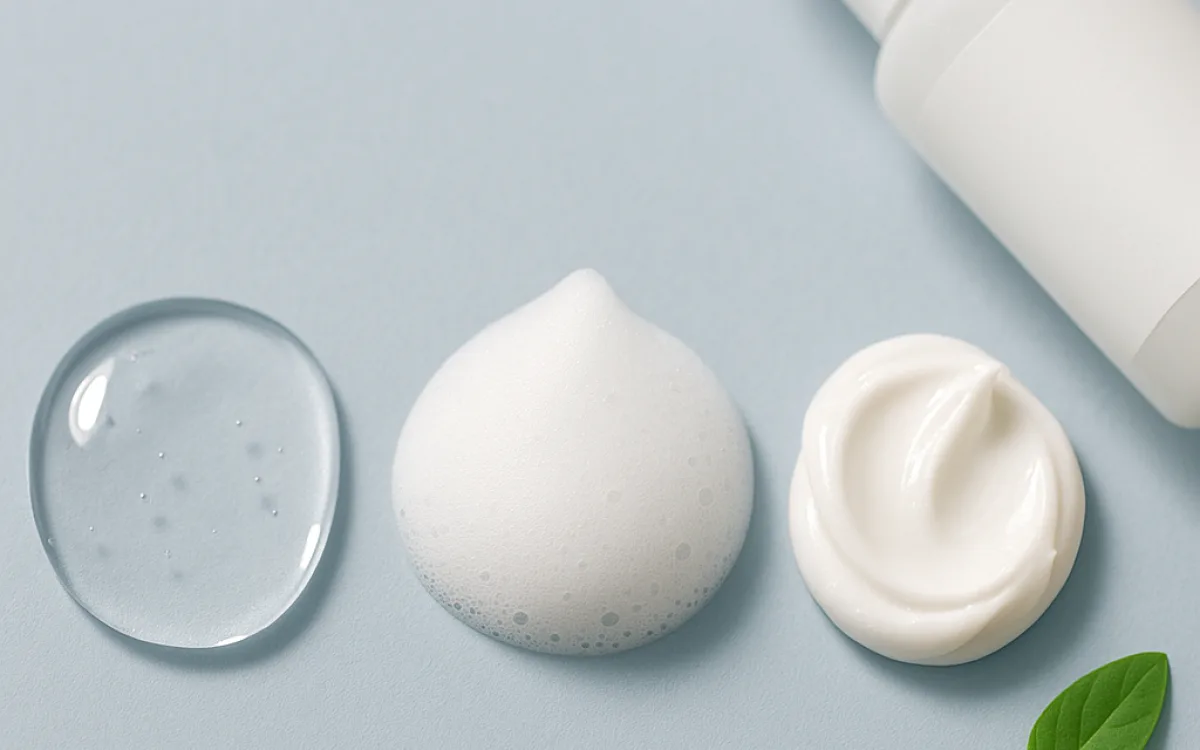
Walk down any skincare aisle and the choice presents itself as a texture: gel, foam, cream, milk, oil, balm. Those textures do correspond loosely to skin types, which is why the shorthand persists.
But texture is a consequence of the formula, not the cause of how it behaves. A badly formulated cream cleanser can be harsher than a well-formulated foam.
What each format is and does#
| Format | How it works | Best for | Watch out for |
|---|---|---|---|
| Gel | Water-based surfactants, low to medium foam | Oily, combination, acne-prone | Can be stripping if sulfate-heavy |
| Foaming | Same, with foam boosters or an aerating pump | Oily skin, people who dislike residue | Foam volume is not a quality signal |
| Cream | Emulsion with milder surfactants and emollients | Dry, mature, sensitive | May feel like it leaves a film |
| Milk / lotion | Lighter emulsion, very mild | Sensitive, reactive, eczema-prone | Weak on heavy make-up |
| Oil | Dissolves oil-based products, then emulsifies | Removing sunscreen and make-up | Needs a full rinse or a second cleanse |
| Balm | Solid oil that melts on contact | Heavy make-up, dry skin | Slow, and needs thorough removal |
Why foam is not the same as strength#
Foam comes from the surfactant system and from added foam boosters. Some very mild surfactants foam well; some harsh ones barely foam at all. The lather tells you about the formulation choices, not about how much lipid the product removes.
The reason foam has a reputation for stripping is historical. Older formulas achieved foam with high levels of sodium lauryl sulfate, which is genuinely irritating. Modern foaming systems mostly do not.
How to choose without guessing#
- Start from how your skin feels twenty minutes after washing, not from the label on the front.
- If it feels tight, move one step towards cream, whatever your official skin type is.
- If it feels coated or your make-up will not sit properly, move one step towards gel.
- Change the evening cleanse first — that is where most of the work happens.
- Give any change two weeks before deciding.
When the format should change with the day#
Nothing requires you to use the same cleanser every time. A common pattern that works well: an oil or balm in the evening when there is sunscreen and make-up to dissolve, followed by a gel or cream; and water alone or a very mild cleanser in the morning.
- Sunscreen only in the evening: one gel or cream cleanse is enough.
- Sunscreen plus make-up: oil or micellar first, then your usual wash.
- After exercise: your usual gel, lukewarm water.
- Morning: water, or a mild cleanse if your skin is oily overnight.
The one rule that survives every format#
Whatever texture you use, judge it by how your skin feels afterwards and by whether the barrier stays intact over weeks. Comfortable, not tight, not coated. Everything else — foam, scent, thickness, price — is preference.
Frequently asked questions
Is a gel or cream face wash better?
Neither in the abstract. Gel suits skin that produces plenty of oil and dislikes residue; cream suits skin that is short on lipids and reacts to stripping. If your skin feels tight after a gel, move to a cream — and ignore what your official skin type is supposed to be.
Does more foam mean a better clean?
No. Foam volume comes from foam boosters and the choice of surfactant, and it correlates poorly with how much a product actually removes. Some of the mildest cleansers foam generously.
Can I use a foaming cleanser on dry skin?
Yes, if it is a mild one. Check for a pH near 5, mild surfactant names such as sodium cocoyl isethionate, and glycerin high in the list. What matters is the formulation, not the format — but if you are choosing blind, cream is the safer bet.
gel vs foaming face washcream cleanser vs geltypes of face washwhich face wash is bestfoaming cleansercleanser texture guide