Micellar Water vs Face Wash: Do You Need Both?
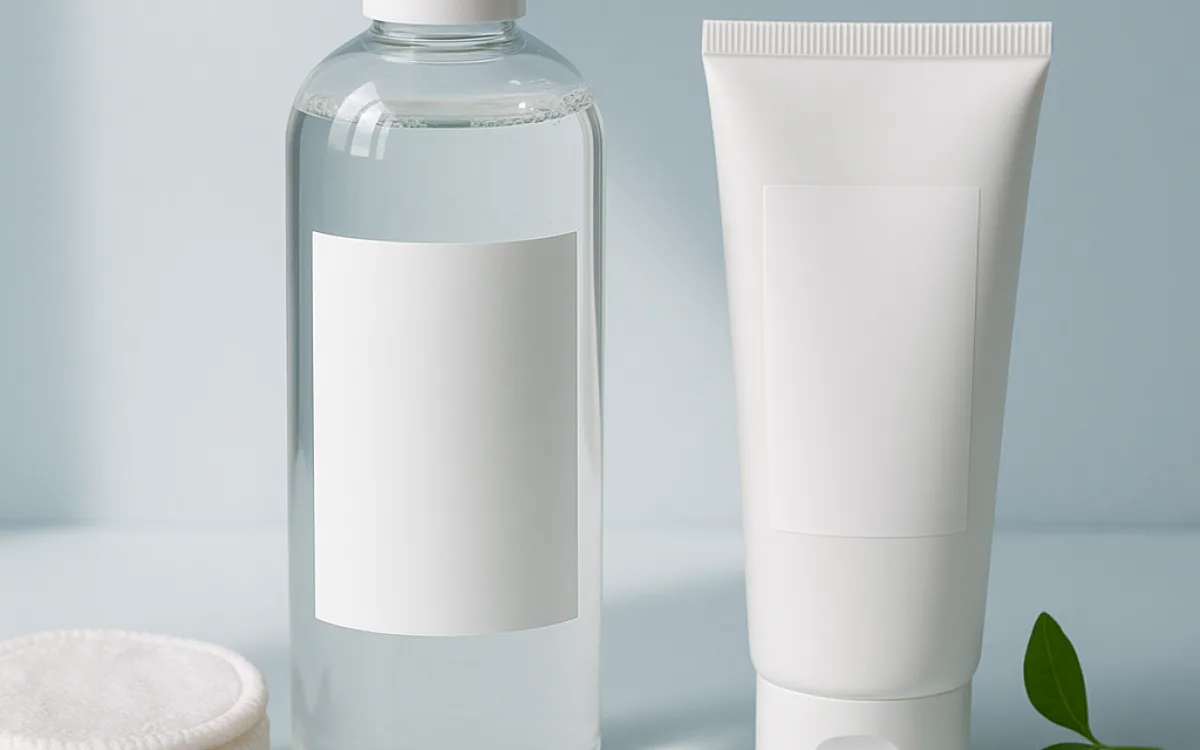
Micellar water is a mild surfactant solution in which the surfactant molecules cluster into micelles — tiny spheres with a water-loving outside and an oil-loving inside. Wipe it over the skin and those spheres capture oil, make-up and sunscreen.
It is a genuinely useful product that gets used, most of the time, for the wrong job.
What micellar water is good at#
- Removing eye make-up, where a rinse-off cleanser is awkward and stings.
- A first step before a normal face wash on days with sunscreen and make-up.
- Cleansing when water is not available — travel, camping, illness, a long flight.
- Very sensitive or reactive skin, where less product contact and no rinse is an advantage.
- Removing sweat quickly after exercise if a shower is not immediate.
What it is not good at#
Used alone, day after day, micellar water leaves surfactant on the skin. Some formulations are designed for that and say no rinse needed; many are not, and the residue is a common cause of low-grade congestion and irritation that people blame on other products.
The rule of thumb: if the packaging does not explicitly say no rinse required, rinse. It costs ten seconds and removes the ambiguity.
Micellar water versus a face wash, honestly#
| Micellar water | Face wash | |
|---|---|---|
| Removes surface oil | Yes | Yes |
| Removes sunscreen fully | Partially | Yes |
| Removes long-wear make-up | Partially | With an oil step first |
| Leaves residue | Sometimes | No |
| Needs water | No | Yes |
| Involves friction | Yes — cotton pad | No |
| Cost per use | Higher | Lower |
The friction point matters more than it looks. Dragging a dry cotton pad across the face twice a day is mechanical stress, and it shows up first around the eyes where skin is thinnest.
How to use it well#
- Saturate the pad properly. A dry pad is friction without cleansing.
- Hold it against the area for a few seconds to dissolve, then wipe once. Do not scrub.
- Use reusable cotton rounds if you use it daily — cheaper and less abrasive when soft.
- Follow with a normal face wash in the evening unless the product states otherwise.
- Do not use it as a toner. It is a cleanser, and leaving it on is not the intended use.
Do you need both?#
If you wear make-up or a heavy sunscreen, both is a reasonable routine: micellar first, wash second. If you wear neither, a face wash alone does the job and micellar water is an occasional convenience rather than a step. Buying both to use both is how a two-product routine becomes a five-product one without any gain.
Frequently asked questions
Can micellar water replace a face wash?
Occasionally yes, routinely no. It removes surface oil and make-up but leaves a light surfactant residue unless the product is specifically formulated as no-rinse. For daily evening cleansing, follow it with a normal wash.
Do I need to rinse after micellar water?
Unless the bottle explicitly says no rinse required, yes. Ten seconds of water removes the residue that causes most of the complaints about micellar water.
Is micellar water good for sensitive skin?
It can be, because the formulas are usually very mild and there is no drying rinse. The catch is the cotton pad — friction is a common irritant for reactive skin. Soak the pad well, press rather than scrub, and consider soft reusable rounds.
micellar water vs face washdo i need to rinse micellar watermicellar water for sensitive skindouble cleansingmakeup removercleansing routine