pH Balance in Face Wash: Why It Matters More Than the Actives
The surface of healthy skin is mildly acidic — around pH 4.7 to 5.5. That acid mantle is not a marketing invention. It supports the enzymes that build the barrier, and it discourages the bacteria that thrive in alkaline conditions.
Traditional soap sits at pH 9 or 10. That difference is the reason bar soap leaves skin feeling tight, and it explains more about a cleanser than any hero ingredient on the front.
What happens at the wrong pH#
- The barrier enzymes that produce ceramides work slowly outside their optimal range.
- Skin takes anywhere from one to several hours to return to its normal pH after an alkaline wash.
- Water loss increases during that window.
- Bacteria associated with acne tolerate alkaline conditions better than the skin flora you want.
- Repeated daily, the recovery never fully completes.
This is not an argument for acidic cleansers being a luxury. It is the difference between a cleanser that costs your skin something twice a day and one that does not.
Typical pH by product type#
| Product | Typical pH | Effect on the barrier |
|---|---|---|
| Traditional bar soap | 9–10 | Significant disruption, slow recovery |
| Syndet bar (soap-free) | 5.5–7 | Mild |
| Foaming gel cleanser | 5–6.5 | Mild |
| Cream or milk cleanser | 5–6 | Mild |
| Micellar water | 5–6 | Minimal |
| Salicylic acid wash | 3–4 | Intentionally low, so the acid stays active |
A salicylic acid cleanser at pH 3.5 is not badly formulated. Below about pH 4 the acid stays in the form that works, which is why those products are deliberately acidic and why frequency should be limited.
How to find the pH of your face wash#
- Check the brand website — many now publish it, and the ones that do tend to be formulating deliberately.
- Look for the phrase pH-balanced, which usually means somewhere between 5 and 6.5.
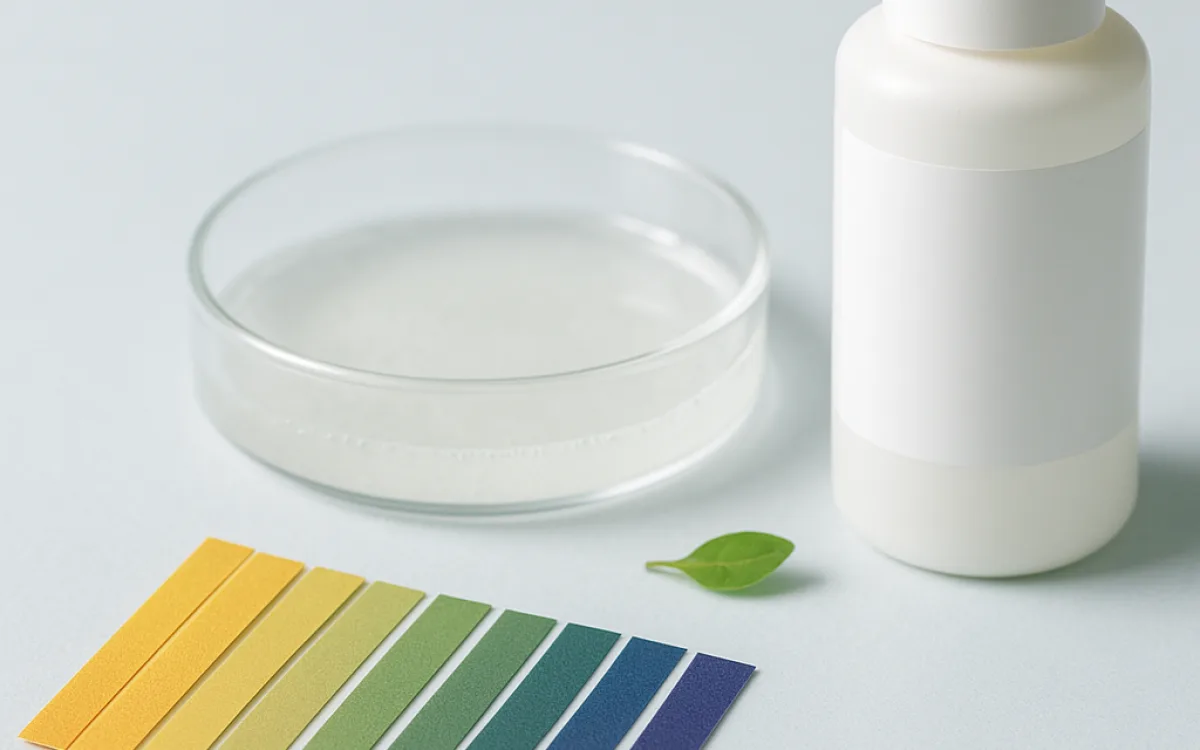
- Buy pH strips. Dissolve a pea-sized amount in a little distilled water and test. They cost very little.
- If it is a true soap — saponified oils, sodium tallowate, sodium palmate on the list — it is alkaline, and no phrasing on the front changes that.
Signs your cleanser is too alkaline#
Tightness immediately after washing that eases only when you moisturise. A squeaky feeling. Skin that looks slightly ashy or dull an hour later. More oil than usual by the afternoon on oily skin, more flaking than usual on dry skin. All of those resolve within two weeks of switching to a pH-appropriate cleanser, which is a short enough test to be worth running.
What pH does not fix#
A correctly acidic cleanser can still be harsh if the surfactant system is aggressive, and it can still contain fragrance you react to. pH is one number of three that matter — alongside the surfactants and what the formula leaves behind — not a guarantee on its own.
Frequently asked questions
What is the ideal pH for a face wash?
Between roughly 4.5 and 6.5 for a general cleanser, which sits close to the skin surface and does not disrupt the barrier. Acid cleansers formulated around salicylic acid are deliberately lower, around 3 to 4, and are meant to be used a few times a week rather than twice a day.
Is bar soap bad for the face?
True soap is alkaline, typically pH 9 to 10, and disrupts the acid mantle for hours. Syndet bars, which are soap-free cleansing bars formulated near pH 5.5, are a different product and are perfectly reasonable for facial use.
How can I test the pH of my cleanser at home?
Buy pH test strips, dissolve a pea-sized amount of product in a small quantity of distilled water and dip a strip. It is not laboratory-accurate but it will reliably tell you the difference between pH 5 and pH 9, which is the difference that matters.
ph balance face washph balanced cleanserskin acid mantleis bar soap bad for facebest ph for skinsyndet bar